Simba Jemwa | Chief Writer
There was a time when Zimbabwean football seemed capable of producing attacking players almost on demand.
Wingers who could beat a man. Forwards who could create something from nothing? Players with the instinct to run at defenders, take responsibility and turn half-chances into goals.
Kelvin “Keegan” Ariferi believes that instinct is disappearing.
And after a playing career that took him from the dusty football pitches of Mutare to the Premier Soccer League, the former winger has decided that his next contribution to the game will be from the other side of the touchline.
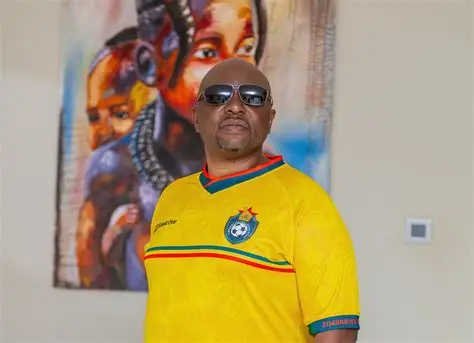
Ariferi, now working as a driver after retiring from football, has established KA Academy, an initiative aimed specifically at developing players in attacking positions.
It is, he says, a response to what he has seen happening in Zimbabwean football.
“Since my retirement, I continued to follow local football and in that time I’ve come to realise that today’s players don’t have what we had as strikers or wingers,” Ariferi said.
“It is this realisation that has driven me to establish KA Academy, which will be focused on specialist training for players in forward or attacking positions.
“Peers I played with are already coaching and I felt that it was time for me to contribute to the development of the game in Zimbabwe, especially in Chizhanje (Mabvuku) and the nation at large.”
There is a sense of unfinished business about Ariferi’s decision.
His own football journey was hardly predictable.
Born in Harare on December 16, 1980, Ariferi was just nine months old when he was taken to Mutare to live with his grandparents.
It was there, at Dangare Primary School, that football first took hold.
He joined NRZ at the age of eight before moving to Super Tigers Under-15 and later Scissors, where he played Under-17 football despite being only 13.
Then football was taken away from him.
His grandparents, concerned about the demands of school, decided that he needed to concentrate on his studies. Ariferi was moved into basketball, where he played point guard at Sakubva High School.
At the time, breaking into the school’s football first team was not going to be easy anyway.
Sakubva possessed a formidable group of players, including Shepard Nkatha and Dananai Chinhowa, both part of the celebrated Tanganda development project.
“My grandparents were worried about my workload at school and made me stop playing football and I moved to basketball where I played as a point guard,” Ariferi recalled.
“But, to be honest, breaking into the school first team would have taken me longer either way because of the quality that was in the team at the time.”
His football exile lasted about a year.
Then came an inter-house competition.
Headmaster, a Mr Samupindi happened to see Ariferi playing football and decided that enough was enough.
“My exile from football lasted for about a year before my headmaster saw me play in an inter-house match and immediately ordered me to stop playing basketball and move back to football,” he said, laughing.
The timing proved perfect.
Many of the older players had completed their schooling and Ariferi returned to the football team as a Form Three student.
He was only 16, but suddenly found himself playing first-team football alongside players such as Clemence Mukudo, who would later play for Highway and Eastern Lions, and Hebron Makukuto, who also featured for Highway, Eastern Lions and Buffaloes.
Makukuto’s younger brother Taurai would later represent AmaZulu and the Young Warriors.
Ariferi was already beginning to establish the characteristics that would define his career.
He could operate anywhere across the forward line, but the wing was where he was most dangerous.
Quick feet. Pace. Dribbling ability. The willingness to take on defenders.
“I was quick on my feet and so most of my coaches played me on the wings,” he said.
In 1997, while still at school, he joined Frontier Steel, then playing in Division Three.
The teenager helped the club climb through the divisions, earning promotion to Division Two and eventually Division One.
He encountered players such as More Moyo of Buymore and Godfrey Dondo of Masvingo United, while Stephen Mahere, who had played for Lancashire Steel, was in charge.
But Ariferi’s football education was taking place across more than one city.
During school holidays he would travel to Harare to stay with his parents and train with Circle Cement.
There, another important figure entered the story. Shadreck Malunga had seen the young winger before. Years later, that memory would prove decisive.
After finishing school, Ariferi travelled to Kwekwe to take up an opportunity with his uncle’s business.
He did not even take his football boots.
“I didn’t even take boots with me,” he recalled.
His uncle’s house happened to be close to the Kwekwe Cables clubhouse, where Malunga was living.
Malunga remembered him from his Circle Cement days and told the club’s coaches about the young winger.
Then came the phone call home.
“My uncle asked if I had quit football and I told him that I still played but had left my boots in Mutare.
“He then asked my dad to bring them to Kwekwe and they arrived on a Wednesday evening in time for me to train with Cables the following day.”
Sometimes careers turn on moments so ordinary that nobody recognises their significance until years later.
For Ariferi, that Thursday was one of them.
Kwekwe Cables were coached by Godfrey Tamirepi. During the training session, one of the regular players was injured and Ariferi was given an opportunity.
He took it.
The club immediately began processing his registration for their Southern Region Division One campaign, where they faced clubs including Kango, Turnall, Hwange and Quelaton.
By 2003, Cables had earned promotion to the Premier Soccer League. The boy who had once been pulled away from football to play basketball had made it. His PSL debut came in 2004 against Hwange at Mbizo Stadium.
Cables won 3-1.
The match was level at 1-1 when Ariferi came off the bench. He delivered two decisive crosses, both converted by Thanks Tengwe, who completed his brace and settled the contest.
The winger had arrived. Cables, however, were soon to disappear. The club were relegated at the end of 2004 and subsequently dissolved, with the franchise eventually being bought and renamed Kwekwe United.
Ariferi moved on.
In 2005 he joined Ziscosteel after being signed by Benedict “Grinder” Moyo and his assistant Paul Gundani. The stay was brief. Willard Khumalo had taken charge at Lancashire Steel and brought Ariferi to the club midway through the 2005 season.
There was, however, a small complication. Lancashire Steel and Frontier Steel were sister clubs. Ariferi had already represented Frontier.
“When I signed for Ziscosteel, Willard Khumalo had been appointed head coach for Lancashire Steel. He brought me to the club midway through the 2005 season but many at the club were not too happy with me when they found out I had previously played for Frontier Steel, their sister club,” he said with a chuckle.
Washington Arubi made the same journey from Mutare through the Frontier Steel connection. At Lancashire, Ariferi found himself among a squad packed with experience and emerging talent. Moses Mafurira, Dick Moyana, Phumzile Zikhali, Philip Makanje, the late Isaac Nyausaru, Malvern Nyakabangwe and Philip Machona were among the established names.
There were also players beginning their own journeys, including Arubi, Wellington Sibanda, Justice Majabvi, Petros Sibanda and George Magariro. Ariferi spent two seasons with Lancashire Steel before moving back into Division One with Border Strikers.
Across his years in the Midlands, he had developed into a productive attacking player, scoring more than 12 goals and, by his recollection, averaging around 20 assists per season.
Then came the injury that changed everything. A knee problem forced him out of Border Strikers in 2011.
“I was at Border Strikers until 2011 when I injured my knee and was released,” he said.
In 2012, Ghetto Pirates helped him through his recovery before he moved back to Beitbridge and joined Super Dynamo midway through the season.
The following year he joined Beitbridge City Council, spending a season there before football pulled him back once more. Border Strikers had dropped to Division Two. Ariferi returned.
The club won promotion to Division One in 2013, later becoming Strikers FC. And the promotion was sealed against one of his former clubs: Beitbridge City. And Ariferi scored the decisive goal.
“It was my best goal in my whole career,” he said.
“We won 2-1 in the derby.”
The goal remains vivid. Former AmaZulu star Thomas Banda was operating on the opposite wing and swung a corner into the box. The defence failed to clear properly and the ball fell towards the edge of the penalty area. Ariferi had always been comfortable using either foot. He did not hesitate.
“I hit it first time on the volley with my left foot and it was game over,” he recalled.
It was the sort of goal that explains why players like Ariferi are difficult to forget.
Not necessarily because they scored the most goals. But because, when the moment arrived, they possessed the imagination and confidence to do something others might not have seen. His knee would eventually have the final say.
In 2014, while back at Border Strikers, the injury flared up again. Football became increasingly difficult. He returned to Mutare and joined Bottle Tigers, owned by Mutare Bottlers, before later spending two seasons with Redwing Mine in Division Two.
At the end of 2016, Ariferi finally retired. The boots were put away. The playing career was over. But the football never really left.
Now, years later, the former winger is looking at the game from a different perspective. He sees a Zimbabwean football landscape in need of players who can attack with conviction, beat defenders, deliver quality balls and, above all, create and score goals.
So he is attempting to give the next generation the education he received through experience. KA Academy is his answer.
The journey from a nine-month-old child taken to Mutare, to a schoolboy temporarily diverted into basketball, to a Premier Soccer League winger, to a veteran of the lower divisions and finally to a coach-in-waiting has brought Ariferi back to where it all began.
The football pitch.
Only this time, he is not chasing the ball. He is trying to create the players who will chase it next.
About the Author