Simba Jemwa | Chief Writer
There is a danger in looking at Zimbabwe’s 2-1 defeat to the Democratic Republic of Congo simply through the prism of the final score.
The Warriors were beaten, yes.
But the more revealing story was how they were beaten.
For long periods, particularly in the first half, Zimbabwe looked a step behind a DRC side that arrived in Harare with a clear plan and the quality to execute it.
The Leopards were not necessarily dominant in possession — the final figures were remarkably close, with DRC having 50.8 percent compared with Zimbabwe’s 49.2 — but they were considerably more purposeful with the ball.
That distinction matters. Possession without penetration is simply possession. DRC had the greater cutting edge.
The Wissa problem
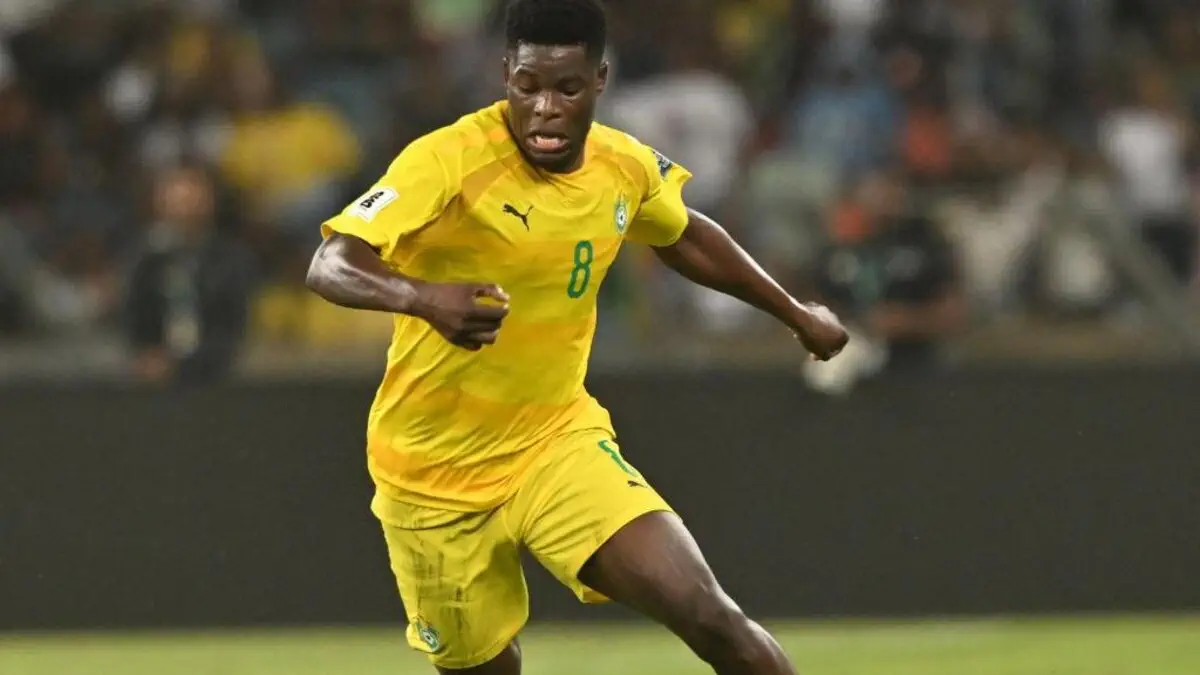
Much of the damage came through Yoane Wissa. The Newcastle United forward was a constant threat and, crucially, was involved in both goals.
His opening goal in the 30th minute exposed a lapse in the Zimbabwe defence, while his pass for Samuel Moutoussamy’s second in first-half stoppage time showed the quality of a player operating at a different level of club football.
Zimbabwe had to know where the danger was. Stopping it was another matter.
Wissa could even have left Harare with a hat-trick after hitting the woodwork early in the second half. That tells its own story.
Zimbabwe’s biggest problem was the first half
The Warriors did not lose this match because they lacked character. They lost it because DRC had already established a two-goal advantage before Zimbabwe truly found their rhythm. That is an important distinction.
Against a side of DRC’s calibre, giving away two goals in the opening 45 minutes creates a problem that effort alone cannot always solve. The second goal, arriving at 45+2, was particularly damaging. Zimbabwe went into the dressing room needing not only two goals but also a way of preventing DRC from controlling the second half.
That was always going to be a difficult equation.
A better Zimbabwe after the break
The encouraging aspect was the response. Zimbabwe emerged with considerably more urgency and began asking questions of the Congolese defence.
The statistics suggest the Warriors were not simply spectators. They finished with 12 attempts, six of them on target, and won six corners. DRC had 13 attempts, with four on target. So this was not a case of Zimbabwe being completely outplayed for 90 minutes. Rather, the damage had already been done.
The Warriors’ second-half performance demonstrated that they could compete with DRC. The frustration will be that they did not do enough of it early enough.
Munetsi’s late intervention
Marshall Munetsi’s 93rd-minute goal was more than a consolation. It was evidence of Zimbabwe’s refusal to accept defeat quietly. The captain had already scored twice in the dramatic comeback against Sierra Leone and again found himself on the scoresheet here.
But there is another lesson in Munetsi’s goal. Zimbabwe needed to create pressure much earlier. Waiting until stoppage time to finally breach the DRC defence left the Warriors with virtually no time to turn pressure into an equaliser.
The bigger picture
DRC now sit on six points from two matches after following their opening victory over Equatorial Guinea with another win in Harare.
Zimbabwe remain on three points, level with Equatorial Guinea, while Sierra Leone are still without a point. The qualification campaign, therefore, remains very much alive. But this defeat provides Zimbabwe’s technical team with something more valuable than a simple post-match statistic. It provides a clear reference point.
The Warriors showed in the second half that they can compete. The challenge is to make that version of Zimbabwe the starting point rather than the emergency response. Against the stronger sides in African football, matches can be decided before a team has time to recover from its own mistakes.
DRC understood that.
Zimbabwe learned it the hard way in Harare.
About the Author