

Simba Jemwa | SportsNATION
There are many ways to measure the health of a sporting industry.
You can look at attendances, television audiences, sponsorship revenues, player salaries or the quality of stadiums. But sometimes the clearest indication that something is changing is much simpler: somebody is willing to put serious money behind an idea.
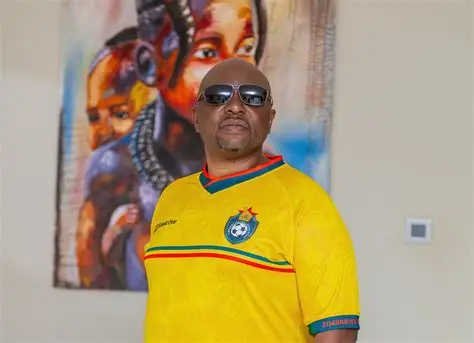
That is where Wicknell Chivayo has become an increasingly significant figure in Zimbabwean football.
Whatever one’s personal view of the businessman, it is difficult to ignore the scale and visibility of his intervention in the domestic game. His involvement has extended beyond conventional sponsorship and into an area Zimbabwean football has desperately needed for years — tangible investment in people, clubs and the infrastructure surrounding them.
Highlanders have been one of the clearest beneficiaries.
Chivayo pledged a US$1 million package to the Bulawayo giants in 2025, with the stated purpose of helping secure talent and cover player sign-on fees. The intervention continued into 2026, with further financial support and the donation of a luxury team bus.
For a club celebrating its centenary, this was more than a headline-grabbing gesture.
It represented an attempt to give one of Zimbabwe’s most important football institutions the resources to operate with greater confidence.
And that matters.
Highlanders is not simply another football club. It is a cultural institution whose identity stretches well beyond the football pitch. When such a club is properly resourced, the benefits can potentially reach players, coaches, administrators, supporters and the wider football economy.
Chivayo’s involvement has also been visible around Dynamos.
In May, after Dynamos lost the Harare Derby to CAPS United, Chivayo still honoured a commitment to provide the club with a new bus and added US$50,000 for the players. His explanation was revealing: he said Dynamos was part of Zimbabwe’s football history and that the gesture was about honouring his word and appreciating the supporters.
That is an important distinction.
Sport needs people prepared to invest when things are going well, but it arguably needs them even more when things are difficult.
The temptation in football is to associate investment purely with trophies. But the real value of serious sports investment should ultimately be measured by what it leaves behind.
A bus gets players to matches. Money pays salaries and sign-on fees. Equipment improves preparation. Better facilities improve working conditions.
But the bigger question is whether that investment creates stronger institutions.
That is where Chivayo’s role becomes particularly interesting.
His support has helped put player welfare, coaching appointments, and transport and club administration into the national conversation. His involvement in Highlanders, for example, coincided with the appointment of former Warriors captain Benjani Mwaruwari as head coach, while the club’s leadership has publicly acknowledged the need for accountability around financial support.
That last point is important.
Money alone does not build a football club.
Governance does.
Planning does.
Good recruitment does.
Coaching does.
And accountability does.
Chivayo himself has called for proper management and clear records concerning the use of his financial support. Highlanders subsequently indicated that it was prepared to engage with him and other sponsors and donors to clarify how support is utilised. ([Herald Online][4])
That conversation is healthy for Zimbabwean football.
The country does not need benefactors who simply arrive with cheques. It needs investment to be converted into sustainable football structures.
Imagine what happens when financial support is combined with proper youth development, sports science, modern scouting, professional administration, data analysis, medical support and commercial planning.
That is when sponsorship becomes development.
And this is why the broader Chivayo story should not simply be about the size of individual gifts.
The more important story is what those interventions say about the changing relationship between Zimbabwean business and sport.
For decades, Zimbabwean football has operated with a frustrating contradiction. It possesses enormous clubs, passionate supporters and an extraordinary football culture, yet many institutions have struggled to match that cultural importance with financial resources.
Capital can begin closing that gap.
A UK-based Zimbabwean football scout, Jomo Dyson Dzapasi, recently argued that investment from Chivayo and other prominent businessmen could provide precisely the catalyst domestic football needs, pointing to the decline of historic clubs through financial difficulties.
That is the bigger opportunity.
Zimbabwe should not merely celebrate people who spend money on sport. It should encourage an environment in which investment produces lasting sporting institutions.
That means clubs should be asking: What does this money build?
Does it develop players?
Does it improve facilities?
Does it strengthen administration?
Does it create jobs?
Does it make matchday better?
Does it help retain talent?
Does it make Zimbabwean football commercially stronger?
Those are the questions that will determine whether today’s investment becomes tomorrow’s legacy. Chivayo’s contribution has already changed the conversation.
He has demonstrated that private individuals can inject substantial resources into Zimbabwean football and that sporting institutions can attract attention far beyond the traditional sponsorship model.
The challenge now belongs to everyone else. Business must look at sport differently. Clubs must become more professional. Administrators must become more accountable. Players must become more professional. And supporters must demand better institutions without losing the passion that makes Zimbabwean football special.
The most exciting possibility is not that one businessman can change Zimbabwean football. It is that one businessman can demonstrate what becomes possible when serious money meets serious ambition. That is the real Power Behind Sport.
And if Zimbabwe can turn today’s generosity into tomorrow’s institutions, Wicknell Chivayo’s most important contribution to the game may ultimately not be the money he spent — but the question he has forced Zimbabwean sport to confront:
What could our sporting institutions become if we finally invested in them as seriously as our supporters believe in them?
About the Author